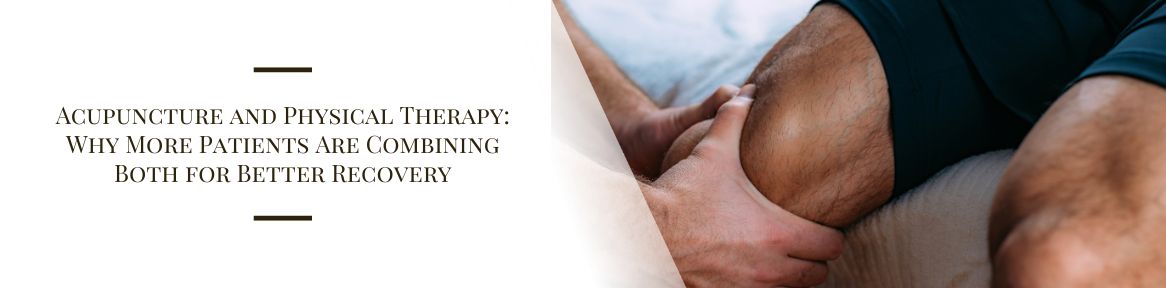
Across hospitals, sports medicine clinics, orthopedic practices, and wellness centers, acupuncture and physical therapy are being used together to help patients recover from injuries, reduce chronic pain, and improve quality of life. Far from competing approaches, acupuncture and physical therapy often complement one another remarkably well.
Understanding the Difference and the Overlap
Physical therapy focuses primarily on restoring movement, strength, mobility, balance, and function. It uses evidence-based techniques such as therapeutic exercise, manual therapy, mobility training, neuromuscular re-education, stretching, postural correction, and balance and gait training.
Acupuncture, rooted in Traditional Chinese Medicine but increasingly studied through modern neuroscience, involves inserting ultra-thin needles into specific points on the body to influence pain pathways, circulation, inflammation, and nervous system regulation. While the philosophies behind the practices may differ, both share a similar goal: helping the body heal and function more effectively.
In many cases, physical therapy addresses the mechanical problem, while acupuncture helps calm the physiological barriers preventing recovery. For example:
- A patient with low back pain may need strengthening and movement retraining through physical therapy.
- But if inflammation, muscle guarding, or nervous system hypersensitivity is too severe, acupuncture may help reduce pain enough for those exercises to become tolerable and effective.
- The combination can create a more complete rehabilitation strategy.
What the Research Says
Over the last two decades, clinical research examining acupuncture alongside conventional rehabilitation has grown substantially. One area with particularly strong evidence is chronic musculoskeletal pain.
A landmark meta-analysis published in the Archives of Internal Medicine analyzed data from nearly 18,000 patients and found that acupuncture was significantly more effective than both no treatment and sham acupuncture for chronic pain conditions including back pain, osteoarthritis, shoulder pain, and headaches. Researchers increasingly believe acupuncture works through multiple mechanisms, including:
- Modulation of pain-signaling pathways
- Release of endorphins and neurotransmitters
- Improved local blood circulation
- Reduction of inflammatory markers
- Regulation of the autonomic nervous system
These effects can directly support the goals of physical rehabilitation. A 2021 review published in the Journal of Pain Research found that combining acupuncture with rehabilitative exercise often produced better outcomes than exercise alone for chronic pain patients.
Another growing body of evidence supports acupuncture for postoperative rehabilitation. Studies involving knee replacement, rotator cuff surgery, and stroke recovery have shown improvements in pain control, mobility, and functional outcomes when acupuncture is incorporated into rehabilitation programs.
The Nervous System Connection
One reason acupuncture pairs so effectively with physical therapy lies in the nervous system. Pain is not purely mechanical. It is neurological. When someone experiences chronic pain or injury, the nervous system can become hypersensitive. Muscles tighten defensively. Movement patterns change. Fear of pain develops. Over time, the body may remain stuck in a protective state long after tissues have begun healing. Physical therapists often see this firsthand. A patient may technically have the strength to move but still experience stiffness, guarding, or pain that limits progress.
Acupuncture appears to help regulate this response. Functional MRI studies have demonstrated that acupuncture can influence brain regions associated with pain perception and emotional regulation. Researchers have also observed changes in cortisol levels, stress response, and parasympathetic nervous system activity following treatment.
In practical terms, many patients simply describe feeling calmer, looser, and less reactive after acupuncture sessions. That matters during rehabilitation. A relaxed nervous system often allows patients to tolerate movement more comfortably, participate more fully in therapy, and recover more consistently.
Athletes Were Early Adopters
Professional athletes helped normalize the integration of acupuncture and physical therapy long before it became mainstream. Olympians, NFL players, runners, and martial artists frequently use both approaches simultaneously for injury prevention and recovery. Why? Because elite athletes understand something important: recovery is multifaceted.
An injured hamstring does not only require strengthening. It also requires circulation, pain control, tissue healing, mobility restoration, and nervous system regulation. Acupuncture is now commonly used in sports medicine settings for conditions such as tendonitis, shin splints, neck pain, low back pain, IT band syndrome, muscle strains, and post-workout recovery.
Meanwhile, physical therapy addresses biomechanics, movement correction, and long-term performance optimization. The combination can shorten downtime and help athletes return to activity more confidently.
Stroke Recovery and Neurological Rehabilitation
One of the most fascinating areas of integration is neurological rehabilitation. Stroke survivors often face complex challenges involving movement, balance, coordination, pain, and muscle spasticity. Physical therapy plays a critical role in retraining movement patterns and improving independence.
Acupuncture has also shown promise in supporting neurological recovery. Several systematic reviews suggest acupuncture may help improve motor function, balance, and activities of daily living in stroke patients when used alongside standard rehabilitation therapies. While researchers continue studying optimal protocols, the results are encouraging.
Patients frequently report improvements in muscle stiffness, pain, sleep quality, energy levels, and emotional well-being. These secondary improvements can meaningfully impact participation in physical therapy programs.
Why Patients Appreciate the Combination
Patients often describe several benefits when combining acupuncture and physical therapy:
- Faster Pain Reduction. Reduced pain may help patients engage more actively in exercises and rehabilitation sessions.
- Improved Mobility. Acupuncture can decrease muscle tension and stiffness, while physical therapy restores functional movement patterns.
- Better Sleep and Recovery. Sleep plays a major role in tissue repair and nervous system regulation. Many acupuncture patients report deeper, more restorative sleep.
- Reduced Reliance on Medication. Some patients find they need fewer pain medications when multimodal therapies are combined.
- Whole-Person Care. Patients often feel their treatment addresses not only the injury itself, but also stress, fatigue, and emotional strain associated with recovery.
Integrative Clinics Are Becoming More Common
As evidence grows, integrative rehabilitation models are expanding. Many hospitals and medical systems now offer acupuncture alongside conventional rehabilitation services. Veterans Affairs hospitals, cancer centers, orthopedic groups, and sports medicine clinics increasingly recognize acupuncture as part of comprehensive pain management strategies.
This shift has accelerated partly because healthcare providers are searching for non-opioid pain management solutions. The opioid crisis forced medicine to reevaluate how pain is treated. Integrative approaches that reduce pain while improving function are gaining significant attention.
Physical therapists and acupuncturists are also collaborating more directly than ever before. In some clinics, practitioners coordinate treatment plans around patient goals:
- Improving range of motion
- Returning to sport
- Recovering after surgery
- Managing chronic pain
- Improving mobility in aging adults
Rather than operating in separate worlds, they work together as part of a broader rehabilitation team.
The Future of Rehabilitation May Be Collaborative
The growing partnership between acupuncture and physical therapy reflects a larger evolution in healthcare. Patients increasingly want treatments that are evidence-informed, personalized, non-invasive, drug-free when possible, and focused on long-term function rather than temporary symptom suppression.
Integrative rehabilitation offers a model that respects both modern biomechanics and the body’s innate healing systems. For some patients, physical therapy alone may be enough. For others, acupuncture provides the missing piece that helps unlock progress.
What matters most is not whether one therapy “wins,” but whether patients regain movement, reduce pain, and reclaim their lives. Sometimes recovery happens not when therapies compete, but when they work together. As more patients and clinicians embrace integrative care, one important question remains: could the future of rehabilitation depend less on choosing sides and more on combining the best tools available?

