- Four Corners Acupuncture Clinic51 Brigham Street
Morrisville, VT1-802-585-5510 

Health WellNews
Acupuncture 101: Understanding the 5th Season
In Traditional Chinese Medicine (TCM), late summer is a separate season.
But from a Western perspective, it doesn’t make sense. First of all, it’s a short season—from around the third week in August to the September equinox. And usually there’s nothing distinctive about late summer weather that makes it different from summer or fall.
Why have a fifth season?
Nature gives us the answer.
TCM is governed by the 5 elements, which represent the cycles of nature. Every plant and animal goes through the cycle of birth, growth, maturation, harvest and storage. Late summer corresponds to the “mature” part of the cycle. Plants are at their peak—fully mature with ripe fruits. It’s not quite harvest time, but it’s past the peak growing season.
One important quality of late summer is its transition from yang energy (active, hot and extraverted) to yin (reflective, cool and introverted). This pattern happens naturally. School resumes. People refocus on their routines. It’s a great time to reconnect with home and family. Even if you don’t identify late summer as a separate season, you probably make this transition anyway.
The earth element guides late summer. Its organs are the stomach, spleen, pancreas and muscles. Its color is yellow/orange and its taste is sweet.
Digestion is especially important in late summer. Pumpkin, squash, sweet potato, peaches, dates, apples, cherries, millet, almonds and coconut are all recommended late summer foods. While these foods have sweet flavors, remember that too much sweetness is not healthy. A big bowl of ice cream is still not a health food—even in late summer.
Earth guides our ability to think clearly. An imbalance in earth can lead to worry or obsession, but balance in earth gives a sense of calm, clarity and adaptability. Late summer is an excellent time to start or recommit to a meditative practice. By taking time quiet time, your daily activities will be more productive.
The emotions of earth are sympathy, compassion and nurturing. If you have considered volunteering, late summer is a good season to make that intention real.
Homemade Fruit Roll-Ups
Ingredients
• 2 ½ – 3 cups ripe or slightly over-ripe fruit, peeled and diced
• Sweetener to taste: honey, sugar, agave, etc.
• 2 teaspoons fresh lemon juice
Instructions:
Preheat oven to lowest temperature,
usually 140° – 200°F
Puree the fruit in a food processor until smooth. Taste and add the sweetener. Remember—the flavor will concentrate as the leather dries, so be sparing. Pour the mixture onto a baking sheet lined with plastic wrap or a silicone baking mat (don’t use foil, parchment, or waxed paper). Spread evenly so it is 1/8” thick. Bake for 6-8 hours until the center is not tacky. Remove from oven and peel off plastic wrap or baking sheet. Cut into strips. Store in airtight container
or freeze.
Tips:
• Suggested fruits: plums, peaches, nectarines, apples, strawberries, raspberries, grapes,
or mangos.
• The addition of sugar or honey enhances the texture and makes the fruit roll-ups chewier.
• If using plastic wrap, it will shrink a little as the fruit dries, so leave a little extra around the edges.
How to Pick a Health-Friendly Office Chair
If you work in an office, it’s likely you sit all day. You probably spend hours and hours in your chair—rarely giving thought to the chair that’s holding you up.
But if you were training for a marathon and spent hours running, wouldn’t you buy good
running shoes?
Choosing an office chair can make the difference between coming home exhausted and in pain, and coming home invigorated. Here’s what to look for in a good chair.
- Chair Shape: Choose a chair that follows the contour of your spine—especially if you are shorter or taller than average.
- Lumbar Support: Test the lumbar support to make sure it fits snug against your lumbar, giving support to prevent slouching or tension.
- Arm rests: Look for adjustable arm rests that adjust up and down as well as in and out for different body widths. Align the arm rests so that they support the weight of your arms when your arms extend down naturally from your shoulders.
- Adjustable seat height: Adjust the seat height so that your arms extend to your desk at 90° angles. Depending on your leg length, you may need a foot rest to support your legs so that your thighs are parallel to the ground.
- Seat length: Sit on the chair with your bottom against the back of the chair. The seat length should be 2-3 finger lengths between the end of the chair and the inside of your knee.
- Seat cushion: Make sure the seat is comfortable.
Once you have your seat adjusted for good body posture, you’re ready for the final step for healthy office posture.
Raise your computer screen so you can see it with your head in a neutral position. This usually means that your keyboard must be separate from the screen. If you use a laptop, put the laptop on a stand and use a separate keyboard on your desk when typing.
Pain Reducing Desk Stretches
A regular routine of stretching will relieve aches and pains and help prevent office injuries.
- Start with a simple head roll—head forward, to the side, back, to the other side and back forward again. The slower the better. Reverse.
- Shrug your shoulders and roll them forward and backward.
- Reach up and then back, touching your back with your right hand as far below your neck as you can. Use your left hand to gently push your right elbow farther behind your head. Repeat on the other side.
- Clasp your hands and turn them so your palms extend in front of you. Extend your arms forward and then above your head.
- Extend your right arm in front of you, with the fingers pointing up and palm forward. Use your left hand to gently pull the fingers toward your body. Repeat on the other side.
- Cross your right leg over your left one. Twist to the right, using your left arm for leverage against your right knee. Repeat on the other side.
- Sit on the edge of your chair, legs extended in front of you (make sure the chair is secure if it has wheels). Gently reach for your toes. If you have back issues, use your desk or a wall to support your body weight as you gently reach forward. Hold and breathe for 10 seconds.
- Walk around. Find reasons to make small trips away from your desk. Any movement is better than no movement.
Helping Teens Beat School Stress
With the start of the school season, many teenagers are again feeling the increased effects of stress. And while adults have many resources to help with stress, teenagers have few. Their stress is high, but their ability to cope is low.
Many schools are recognizing this and taking steps to help their students. Some schools have yoga programs or use therapy dogs. Some teach Transcendental Meditation or Mindfulness Training. More and more schools understand that teaching stress management is an important part of preparing teenagers for life.
If you have access to classes that help with stress, consider offering them to your teen. But even without classes, there’s a lot you can do to help your stressed teen.
Points Towards Health
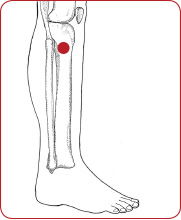
Three Mile Point (ST 36)
Location: Four finger widths below the kneecap, one finger width to the outside of the shinbone. If you are on the correct spot, a muscle should flex as you move your foot up and down.
Function: Strengthens the whole body, especially the immune system; tones the muscles and aids digestion as well as relieves fatigue.
Watch for signs of stress. Fatigue, headache, feeling sick, mood swings, changes in sleep or eating patterns, a drop in grades or difficulties in relationships can all be signs of stress. Address stress before it is a serious problem.
Be available. Even if you are busy, make time to spend with your teen—especially the times your teen is most likely to open up (bedtime, driving, etc.)
Soften your reactions. Teenagers are very sensitive. Express your opinions without judgment or argument.
Listen and translate. Sometimes teenagers can’t accurately describe how they are feeling. Sometimes “no one likes me” or “I’m stupid” means “I’m stressed and worried.” Help them identify feelings of stress so they know how to care for themselves.
Listen and illuminate. Sometimes teenagers lump feelings into a big pot and draw grandiose conclusions. “My teacher hates me” can mean that the teacher was just grouchy. Help your teenager separate real events from imaginary ones, real conflicts from misunderstandings.
Stop rushing. Remember that you may be hearing only part of the story. It may take time for a teen to relax enough to speak openly. Be available for long conversations.
Facilitate support from friends. Encourage your teenager to spend time with supportive friends and family.
Teach self-care. Encourage your teen to exercise and eat well. As challenging as it may be, talk about the benefits of a full night’s sleep. Point out that it feels good to feel good.
Teach time management. Teens are not likely to ask for help managing their busy schedules, but sometimes they need it. Encourage them to think of ways to complete their work without stress.
Ask your teen what they need. Do they need advice or just someone to listen? Do they need strategies or loving support or active intervention? Allow your teen to identify what would
be helpful.
Stop being helpful. Sometimes extra advice, strategies or tips just give the teen more things to worry about. Remind the teen that they are doing great.
Allow alone time. Sometimes being alone, watching YouTube or playing computer games is a way for teens to unwind. Understand that they need to relax, even if you don’t enjoy the activity.
Sun Safety Tips
It’s summertime. It’s time to get outdoors and enjoy the sun.
Follow these sun safety tips to protect your skin and avoid a nasty burn.
- Cover up. Wear clothes and a hat to protect your skin.
- Find shade. Instead of spending all day under the hot, beaming sun, spend part of the day in the shade. If no shade is available, bring an umbrella or tent.
- Avoid the noon sun. Ultraviolet (UV) radiation peaks at noon, when the sun is highest in the sky. Time your fun in the sun for early morning or late afternoon when the sun is less intense.
- Wear sunglasses. Protect your eyes from UV radiation.
- Choose sunscreen wisely. Not all sunscreens are made the same. Use the tips below to pick the best sunscreen.
- Put on sunscreen before getting dressed. If you apply sunscreen around clothes, you may miss a spot.
- Apply sunscreen to all exposed skin—including your part or bald patch. Any skin can burn in the sun.
- Allow 20 minutes between applying sunscreen and going outside. This allows the sunscreen to penetrate the upper epidermis of the skin.
- Buy new sunscreen every year so the ingredients stay fresh and potent.
- Protect children, especially babies, from the sun. Their skin is extremely vulnerable
Sun Protection Do’s and Don’ts
Do:
- Do use products with zinc, titanium dioxide, avobenzone or Mexoryl SX. These ingredients give good sun protection without penetrating the skin and entering the bloodstream.
- Do use sunscreen creams or lotions.
- Do use broad spectrum protection.
- Do use sunscreens labeled “water resistant for beach, pool and exercise.”
- Do use SPF 30+.
- Do reapply often.
Don’t:
- Don’t use products with vitamin A (retinyl palmitate). Vitamin A is good to eat but studies show it is harmful on your skin.
- Don’t use products with oxybenzone, a synthetic estrogen that can enter the bloodstream through the skin.
- Don’t use sunscreens with added insect repellent. Apply insect repellent separately. Put it on before your sunscreen.
- Don’t use sprays or powders. Sprays and powders release sunscreen particles that may not be safe to breathe.
- Don’t use SPF above 50+. High SPF numbers are misleading. They may tempt you to stay in the sun longer, exposing you to types of skin damage other than sunburn.
Points Towards Health
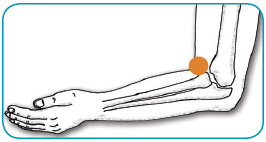 Location: At the outside edge of the elbow crease
Function: This is a great point to alleviate heat in the body. It is especially helpful in reducing skin irritation and inflammation, and can be used to alleviate itching. This point is also helpful for burning diarrhea, hot flashes, heat stroke and hives.
Also good for arm, shoulder and elbow pain.
Use this acupuncture point if you have red, itchy, oozing and inflamed.
(ie. Poison Ivy)
Acupuncture 101: How do Needles Work?
Ever wonder why inserting a tiny needle between your thumb and index finger can help your headache? Or putting needles in your ear can help your indigestion?
Many people wonder how acupuncture works. Scientists and doctors are especially prone to skepticism about acupuncture. To people trained in western medicine, it doesn’t make sense. Traditional Chinese Medicine (TCM) does not follow their familiar logic.
Yet there is growing body of evidence that TCM, and acupuncture specifically, is an effective treatment for many injuries and diseases–often with few side effects. For these reasons more and more hospitals, clinics and doctors worldwide are recommending it for their patients.
Research and clinical trials will continue but for the people who have found relief from their symptoms and conditions using these ancient techniques, such research is unnecessary. They know acupuncture works.
But why?
Western Perspective
There are several theories to explain acupuncture. The most widely accepted is that the stimulation of acupuncture points with needles sends electrical signals to the brain to release endorphins, the chemicals that make us feel good. Another theory states that acupuncture needles stimulate blood flow and tissue repair at the needle sites. Still another states that needles send nerve signals to the brain that regulate the perception of pain and reboot the autonomic nervous system to a “rest and relax” state. Some scientists now believe that acupuncture uses several of these mechanisms at once.
While each theory explains some of the clinical trial results, none of them explain the wide range of conditions that benefit
from acupuncture.
Eastern Perspective
There is no western analogy to Traditional Chinese Medicine concepts.
TCM believes Qi, or life energy, flows through the body. The Qi flows in channels called meridians and the meridians connect the organs together. To remain healthy you need the free flow of Qi through the meridians, much like rivers flow in their riverbeds.
Sometimes the flow of Qi becomes imbalanced. Like a river, it can be blocked, excessive or deficient. To rebalance the Qi, you stimulate acupuncture points to free the flow of Qi
and return it to a more balanced state.
One way to stimulate the points is with acupuncture needles.
Since the meridians connect the organs of the body, sometimes you can stimulate an acupuncture point that seems completely unrelated to the organ you want to balance. If you unblock a river at one point the flow of the entire river, upstream and downstream, returns to normal. Acupuncture works much the
same way.
References:
http://online.wsj.com/article/SB10001424052748704841304575137872667749264.html